At GoGood, we’re combining travel, technology, and topophilia to transform tourism into a powerful force for good. I founded GoGood in 2024 after leaving National Geographic, where I worked 16 years building websites, apps, maps, and guides for travel and conservation. Before that dream job, I directed enterprise GIS at The Nature Conservancy (TNC), leading efforts to build technology and datasets to catalog, analyze, and conserve Earth’s declining biodiversity.
My work is centered on places – communicating about them, and understanding and affecting the systems that degrade and enhance them. I’ve learned that two core elements are needed to conserve and regenerate places, regardless of the scale or type of place – topophilia and a stewardship mindset.
Topophilia, or love of place, is a deep emotional connection to a place. The larger the scale of place (site, town, state, country, continent, or planet), the more people must share that love to activate the resources and agreements needed to conserve it.
Stewardship mindset is the careful, committed, responsible management of a place and its treasured assets. The more intensively the place or asset is used, the deeper and broader that mindset must extend to conserve it.
Together, they provide the emotional and psychological foundation needed to motivate and guide the challenging collective work of conservation and regeneration.
Moving from TNC to NatGeo, my focus expanded from biodiversity conservation to sustainable tourism, which also includes cultural heritage conservation and sustainable economic development. I saw the massive scale of the $11 trillion travel and tourism industry and its positive and negative impacts on places, people, and the planet. I learned that the double-edged sword of tourism can be honed on its positive-impact edge, and dulled on its harmful edge, making it a powerful tool to help solve environmental and social problems.
Tourism’s broad scale and distribution, its geographic bias toward places with important natural and cultural assets, and its huge flow of capital makes it a key sector to achieve impact at scale. I believe that more than any major industry, travel and tourism is infused with the emotional capital of love and caring needed for broad engagement and long term impact.
An Industry Infused with Love
I’ve been privileged to travel around the world for work and on vacations and adventures with family and friends. For me, travel and exploring places and cultures is one of the things that makes life worth living. I know I’m not alone in that.
People love to travel. On average, Americans spend around $5,000 a year on leisure travel, with affluent travelers spending much more. We love discovering and exploring places, and doing it with the people we love. As travelers, tourism greatly impacts our finances, life experiences, and knowledge and appreciation of the world and its diverse inhabitants.
We often say we “love” the places we visit – those that deliver fun, interesting, and meaningful experiences. But do we actually care about, and for, these destinations? In fact, most of us do say we care about the places we visit.
According to Booking.com’s 2025 Sustainability Survey
- 77% of travelers seek authentic experiences that reflect local culture.
- 73% of us want our money to go back to the local community, and
- 69% of us want to leave places better than we found them.
And those numbers are increasing steadily each year.
But research shows that there’s a significant “say-do gap” between what we say and how we behave when traveling. Many factors determine our behavior as tourists. In general, if it’s convenient and fits our tastes and budgets, most of us act on the care we feel for destinations and make efforts to enhance our positive impacts and limit our harmful ones.
Destinations are starting to tap into our inherent care for places by making it easy and rewarding to be a good visitor, and changing the “choice architecture” to make good choices default behavior.
“Good” travel choices that result in positive and regenerative local impact include:
- Spending at locally-owned businesses, including lodging, dining, events, and tours
- Choosing lodging and transportation options with lower environmental impact
- Engaging with local cultures and communities, if invited to do so
- Choosing places and experiences that support Indigenous culture and heritage
- Choosing walkable or bikeable destinations and eco-friendly activities
- Choosing destinations that are not over-visited
Fortunately, this is exactly what most travelers are seeking. But it’s not always easily available or discoverable due to the ways tourism is developed, managed, and marketed.
Destination Stewardship
As much as tourism impacts travelers financially, psychologically, and emotionally, its impact on destinations and the people who live there is much greater.
For destination communities and ecosystems, tourism can be economically and environmentally helpful. Communities use it to harness outside revenue to grow businesses and jobs, build infrastructure, conserve natural and cultural assets, and support creative industries and events. That revenue stream, combined with locals’ shared love and pride of place, is what sustains and enhances places. For places with the most significant and attractive assets, like UNESCO World Heritage sites, tourism is often the lifeblood of a community, and key to its conservation efforts.
But depending on how it’s developed and managed, tourism can be destructive to places, causing problems of overcrowding, pollution, and degradation of natural and cultural assets. Increasing demand for access and ownership of treasured places can limit their access and affordability for local people. And foreign ownership of tourism assets can lead to inequity, labor exploitation, and economic leakage, where profits from tourism enterprises are extracted from the place instead of being reinvested in local communities, infrastructure, and conservation.
The harmful effects of poorly-managed tourism also degrade the visitor experience, which can lead to the decline of places, including their economy, culture, and environment. Treasured places can be loved to death.
Fortunately, tourism can be developed and managed in ways that balance the needs of visitors, residents, and outside investors, and allow places to conserve their assets and grow their visitor economies sustainably. The holistic, community-centered practice of destination stewardship is gradually replacing the narrowly-focused, growth-centered destination marketing approach that drove tourism organizations for over a century.
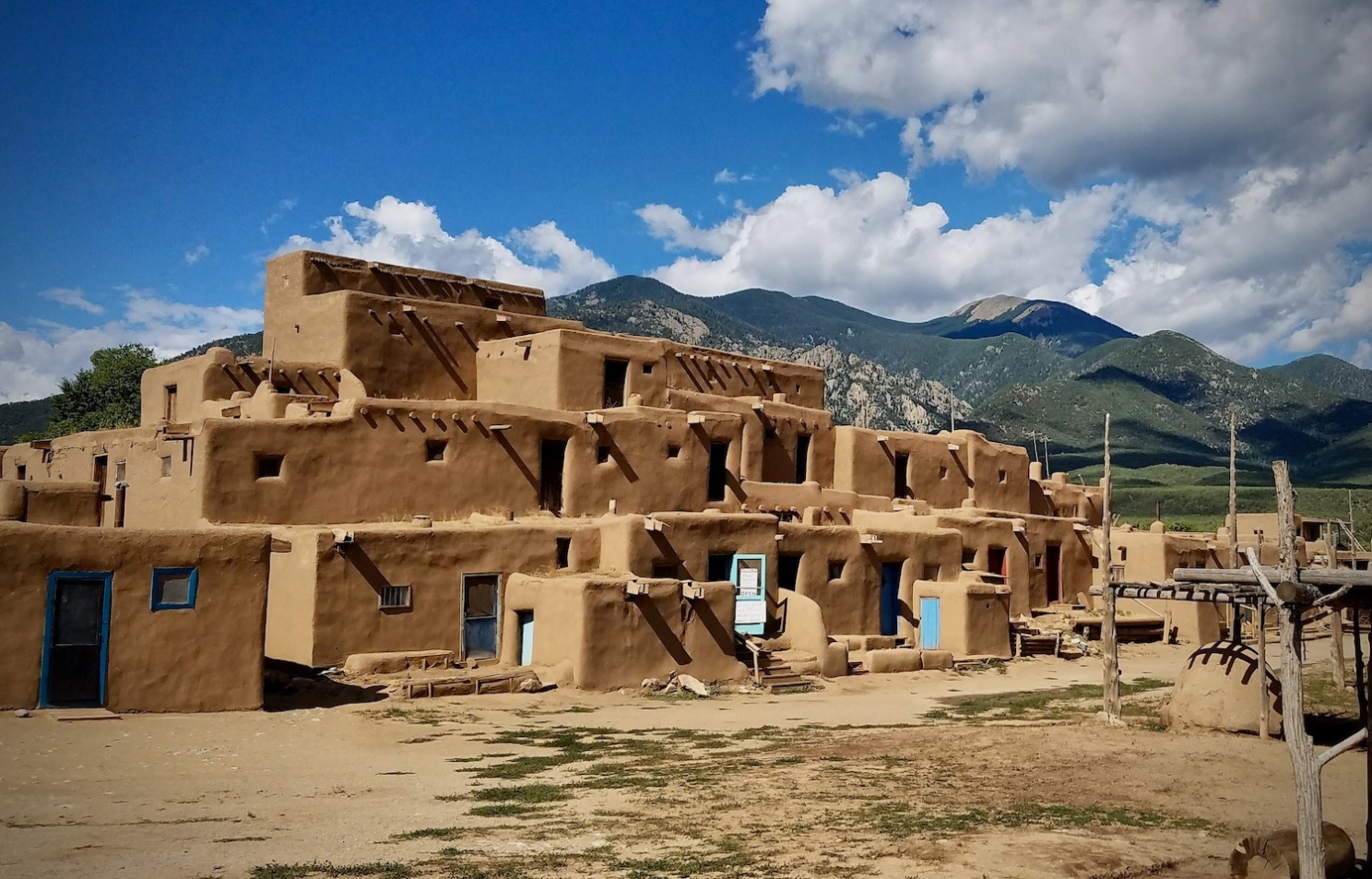
The town of Taos, New Mexico is an interesting recent example of how destination stewardship is being implemented at the local level. Its flagship attraction is Taos Pueblo, a historic Native American village and World Heritage site that’s been continuously inhabited for 1,000 years. It’s an iconic example of a cultural asset managed through long-term community stewardship.
The Taos Destination Stewardship Network, with representatives from local and tribal governments, public land agencies, businesses, and residents, leads integration of the Taos Destination Stewardship Plan into the town’s tourism planning, implementation, and impact measurement initiatives. The Plan’s executive summary outlines its purpose:
“The Taos Destination Stewardship Plan (DSP) is a five-year blueprint guiding Taos towards a more sustainable and equitable future. For Taos, sustainability means protecting its natural resources, preserving its diverse cultures and heritage, and making sure tourism’s economic benefits are distributed equitably among all communities. Designed to address the complex inter-related challenges posed by tourism, the Taos DSP emphasizes a delicate balance between the needs of visitors, residents, businesses, and safeguarding natural and cultural heritage.“
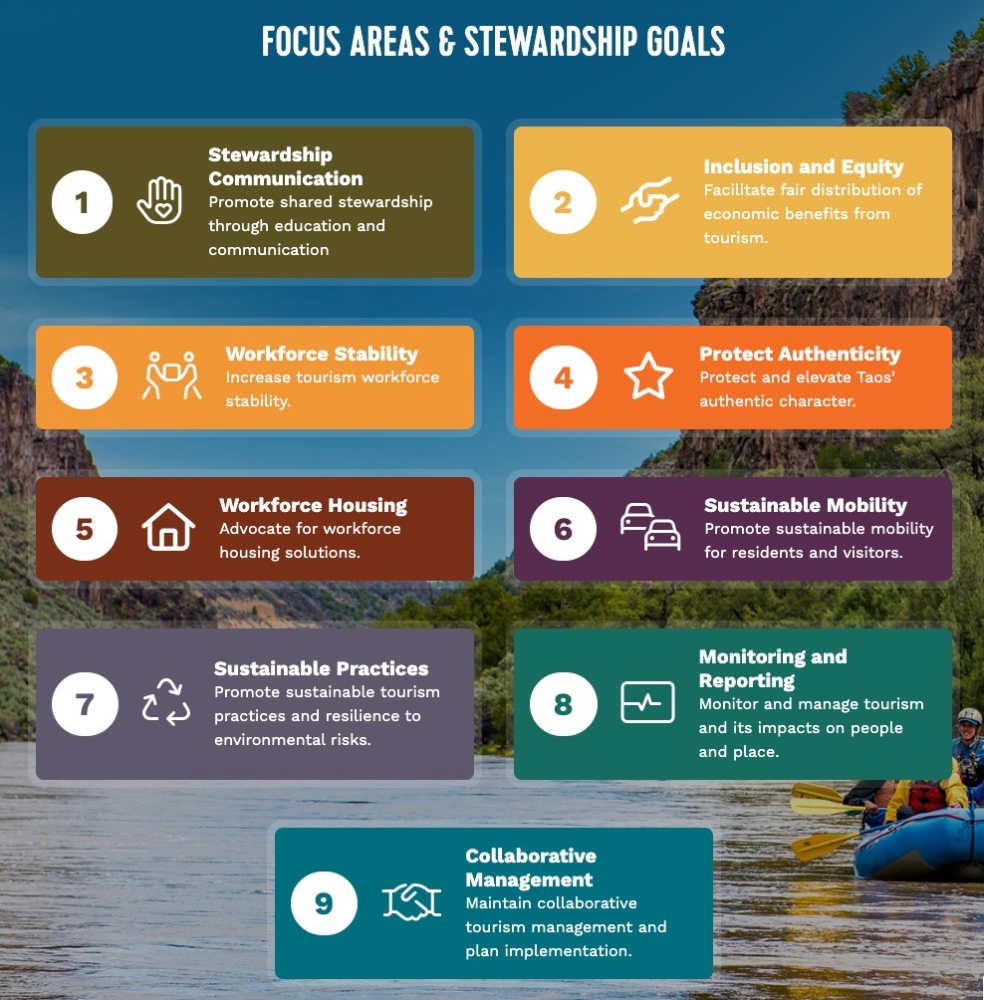
The Plan’s nine Focus Areas and Stewardship Goals outlined below represent the type of outcomes that stewardship-centered tourism management defines. Contrast them with the traditional destination marketing goals of increasing visitor numbers, stays, spending, clicks, and visitor satisfaction. Of course those marketing and commercial outcomes are important, and tracked by Visit Taos, but they are not the primary goals for managing the town’s visitor economy.
My home state of Colorado is leading the transition from destination marketing to stewardship at broader scales, through its statewide Destination Stewardship Strategic Plan and seven regional plans the Colorado Tourism Office launched last year. It includes resources, tools, and grants for local implementation to help our state manage the impacts of our 95 million visitors and spread the benefits of the $28 billion their visits generate each year.
The statewide plan reflects tourism’s influence on many facets of the visitor and resident experience. It presents 118 strategies organized into 14 sections across these two focus areas, representing the tourism industry and the natural and cultural assets it depends on:
At the local level, the mountain resort towns of Breckenridge and Aspen are implementing localized frameworks to convene tourism stakeholders and conserve their assets, including destinationwide-wide sustainability assessments and certifications like IDEAL and Green Destinations. These efforts are helpful in the communities’ marketing and branding campaigns to attract the growing market of travelers seeking authentic, sustainable destinations – visitors whose behavior aligns with their communities’ stewardship values and goals.
Geotourism Origins
I love seeing the destination stewardship approach and term adopted across the tourism industry. Like GoGood, it sprang from National Geographic’s Geotourism program, which was founded by travel editor Jonathan Tourtellot in 1997. I was fortunate to lead the Geotourism program from 2012 to 2016, up until NatGeo Maps’ parent company 21st Century Fox decided to end the modestly-profitable, mission-oriented B2B program to focus on higher margin direct-to-consumer products. But the approach and lessons of geotourism live on.
Jonathan coined the terms “destination stewardship” and “geotourism,” tourism that sustains or enhances the geographic character of a place, its environment, culture, aesthetics, heritage, and the well-being of its residents. With the help of Solimar International, we refined the geotourism process and products and engaged dozens of destinations around the world – holding workshops and convening stewardship councils to co-curate and publish MapGuides that embodied and shared geotourism principles and content in printed and digital form.
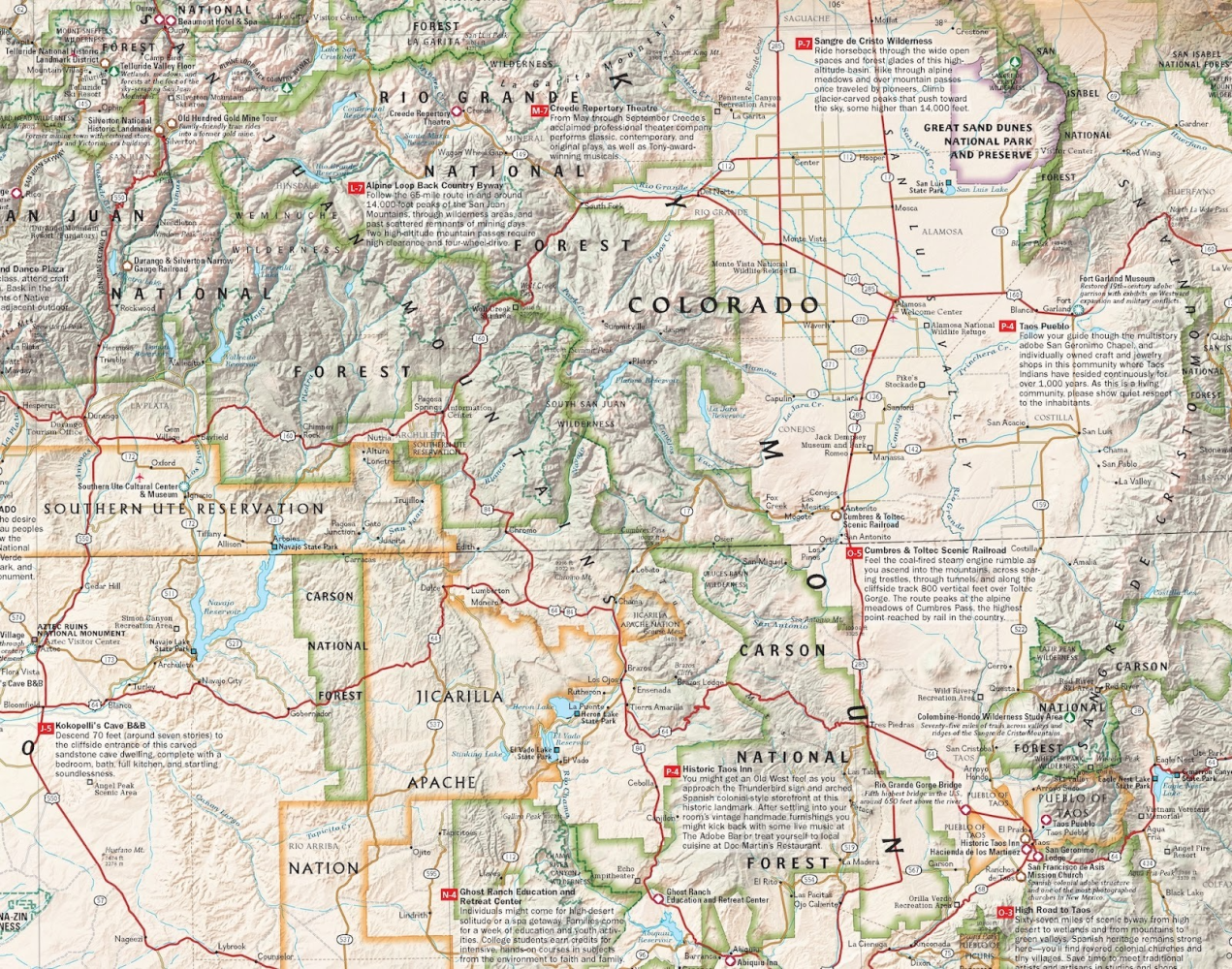
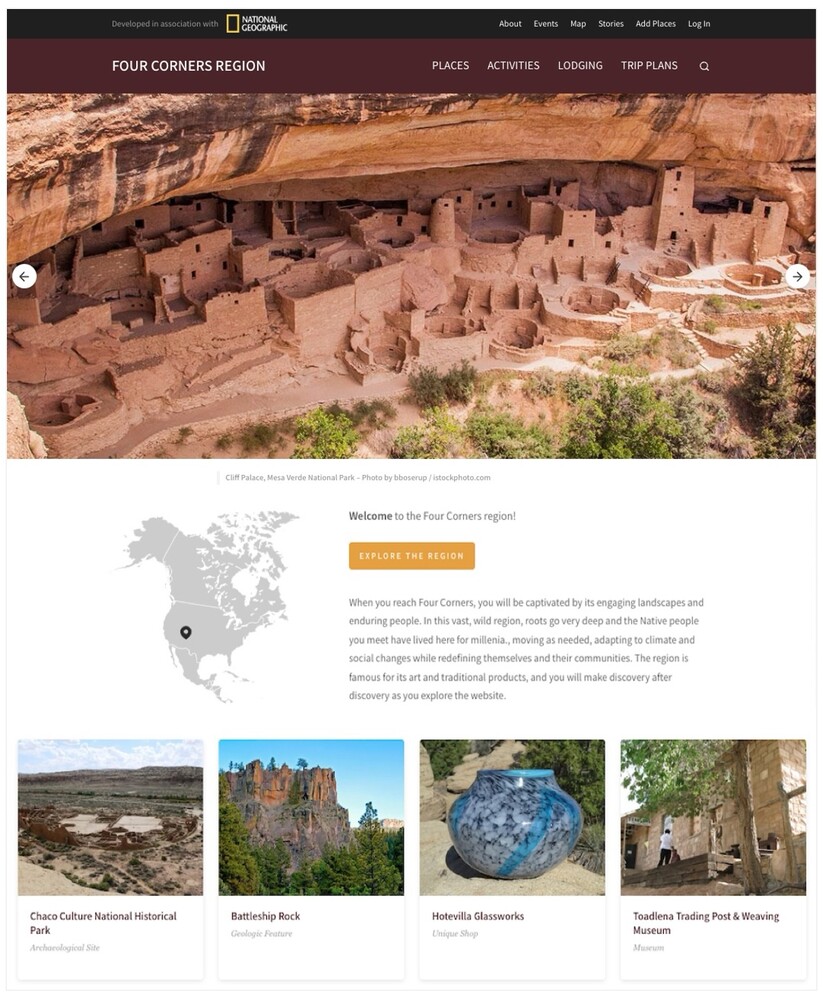
Although their design and content is a bit dated, some of those destination websites, maps, and stewardship networks are still maintained and published today, including Four Corners, Crown of the Continent, Heart of the Continent, Tennessee River Valley, Delaware River Valley, Sierra Nevada, and Central Cascades.
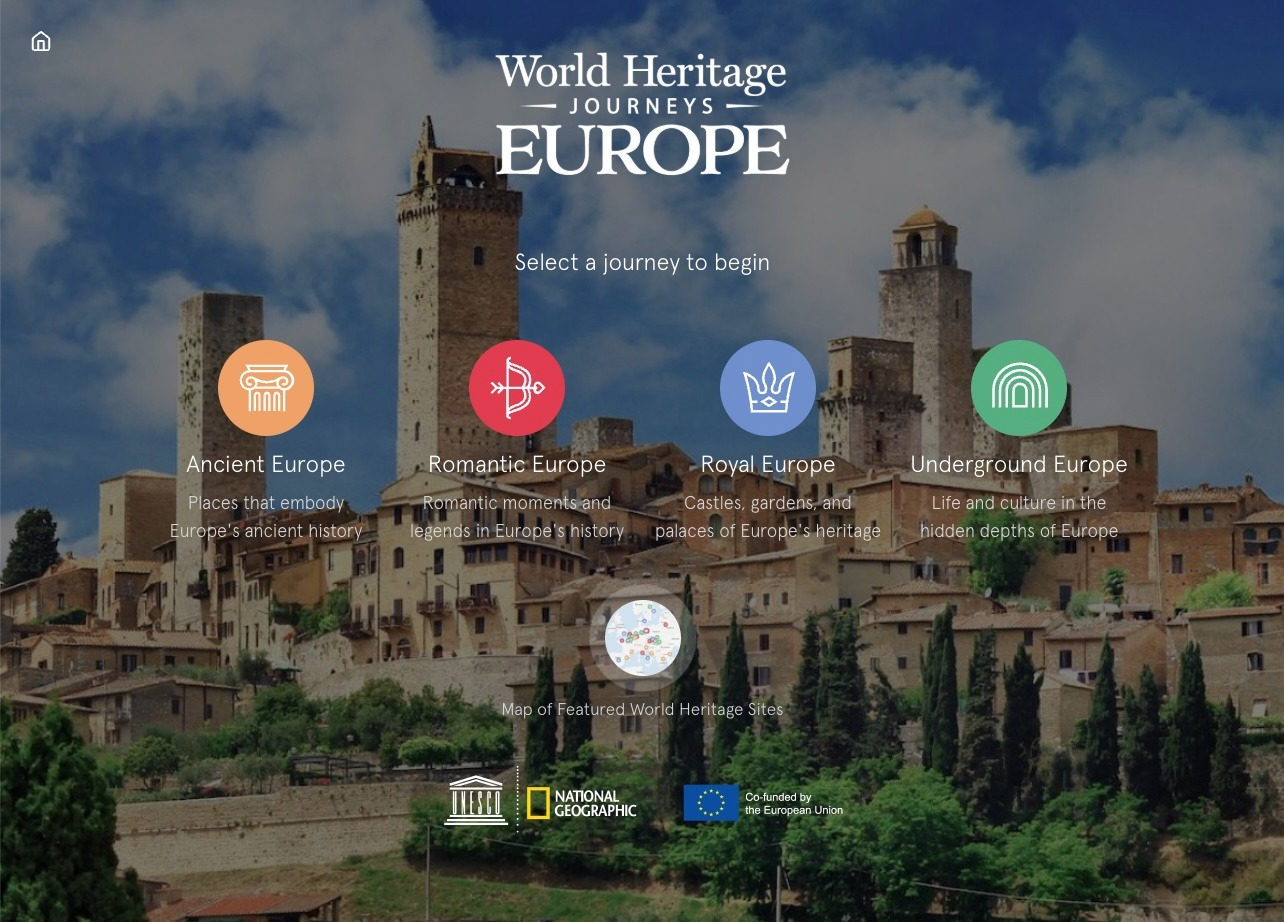
In partnership with UNESCO, we modified the approach for collections of destinations in Europe and South Asia through World Heritage Journeys projects in 2017-2020.
The Power of Collective Curation
In all of these projects, we found that the process of co-curating a mapguide to catalog a destination’s authentic and sustainable assets is a powerful collaborative exercise for communities. It convenes diverse stakeholders and sparks important conversations about the value of their natural and cultural heritage, current and future threats, and how to collectively manage their destination to balance economic development and conservation, and the needs of visitors and residents.
A challenging but key element of destination stewardship is inclusion and representation of the diverse set of stakeholders that make up and are impacted by a region’s tourism economy. They include hospitality and retail businesses and tour operators who rely on visitors to maintain and grow their businesses; government agencies and nonprofits who own and manage parks, trails, museums, and cultural sites, and must respond to shifts in visitation, impacts, and funding; and residents and businesses who receive few benefits from tourism and have no control over visitation, but are impacted by it nonetheless.
There are limited opportunities and mechanisms to convene these diverse stakeholders to discuss and collaborate on destination management. Besides the tourists who use the variety of places, products, and services they supply, what all tourism ecosystem members have in common is the place they call home… the natural and cultural spaces they enjoy and share… the place they all love.
The mapguide literally and visually represents the place and assets they all care about. It tells the story and publishes the facts about their place. It encodes their shared knowledge, guidance, and caring about where, what, and how they want visitors to experience their home.
And all the stakeholders tend to show up to the workshops and comment on the mapguide. Folks in the tourism and outdoor industries love maps, and like contributing their knowledge to them. It’s an interesting and fun project that engages asset managers emotionally and intellectually, and it delivers economic and stewardship benefits.
What we and others who lead participatory mapping projects have discovered, is that these projects can be catalytic and transformative in cultivating a sense of community and shared responsibility. And when the mapguide is collectively maintained and enhanced as a community stewardship and marketing resource, it serves as a platform for conversation and action around economic, cultural, and environmental issues – a tool for community stewardship and marketing.
The GoGood Platform
GoGood is an evolution and update of the Geotourism approach and platform, which fills important gaps to make it more effective, scalable, and self-sustaining.
The GoGood platform includes:
- A locally-curated, web and mobile travel guide app that’s beautiful, easy to use, and private, without ads or harvesting and selling personal data.
- Incentives and tools for local businesses to assess and improve their community impact and participate in Destination Stewardship Networks (DSNs).
- Flexible processes and funding for communities to grow and support DSNs adapted to their unique local needs.
To keep the platform pure and permanently focused on helping people, places, and the planet – and to prevent the enshittification that inevitably degrades two-sided marketplace apps and travel websites – we have structured GoGood as a nonprofit community foundation. But we’re developing and running it as an entrepreneurial startup, designed and built to scale globally. Visit the GoGood Global beta app to explore 20+ destination guides we’ve started developing.
Available as a standalone mobile app or embeddable map widget for partner websites, GoGood offers a rich catalog of places, experiences, and guidance to visitors and residents. The menu of locally-curated experiences includes cultural and outdoor attractions, lodging, food, drink, agritourism, tours, events, shopping, routes and trails, environment and safety guidance, and opportunities to volunteer, donate and learn about nonprofit projects. The app is designed for both visitors and residents who want to explore and support the most authentic and sustainable assets in their area.

Users can search, filter, and save assets in private folders and trip plans, and share them with friends and followers. You join destinations by reviewing and agreeing to a local stewardship pledge, which lets you download the guide for offline use and receive updates, guidance, and a variety of guest perks.
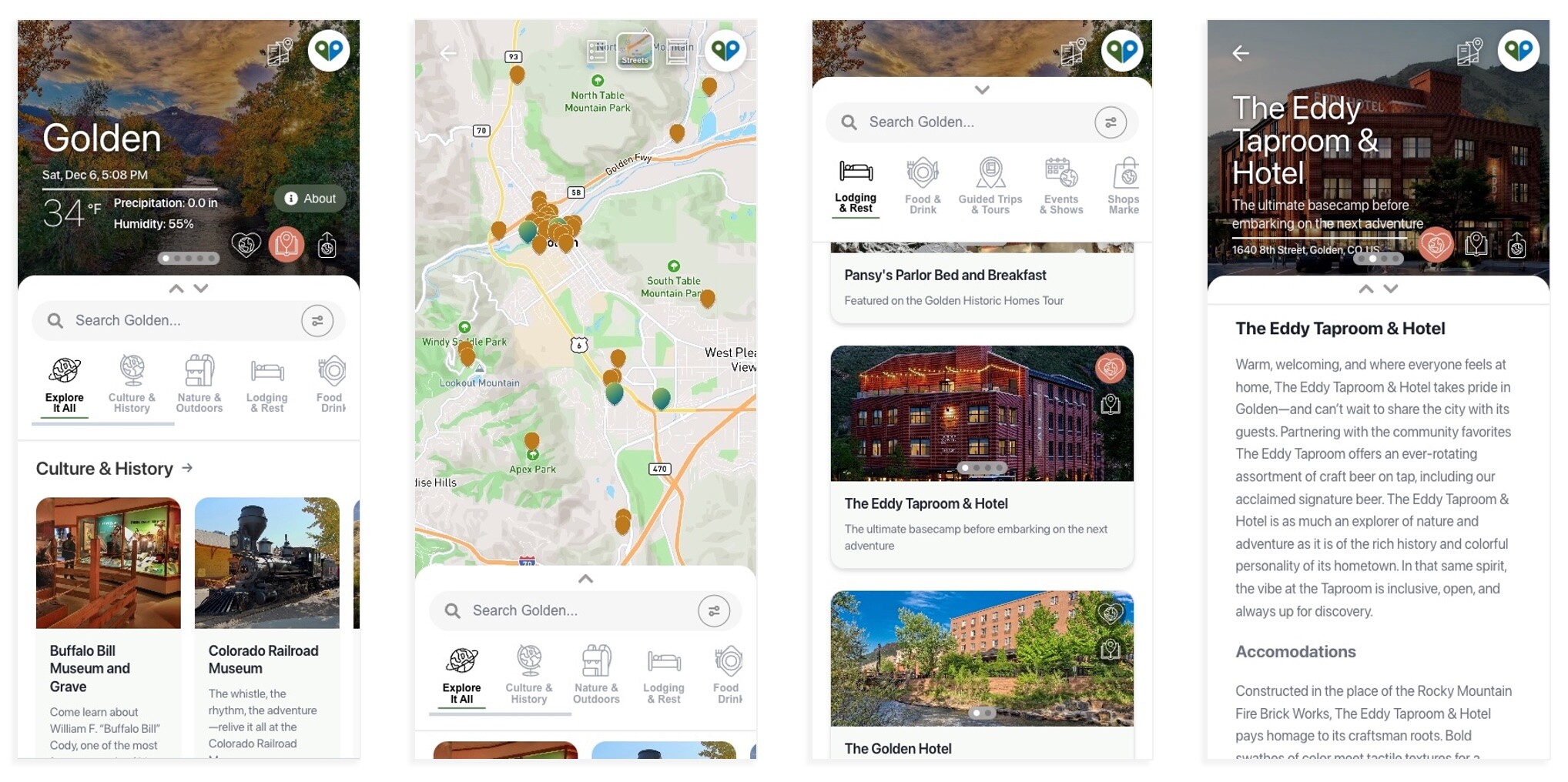
Anyone can join GoGood as an individual member, with the ability to register their local business or nonprofit to feature in the guide. Members are asked to recommend three local places and experiences to feature on the guide, and to help review and verify the authenticity and sustainability of places they know.
To be featured in the guide, businesses and organizations must:
- Agree to the values and join the local Destination Stewardship Network
- Do a 30-minute self-assessment of their social and environmental impact
- Receive an impact scorecard with ideas and tips for improvement
- Commit to improve their impact in some way in the coming year
- Provide descriptions, pictures, and links for their mapguide profile
- Optionally provide discounts or freebies for GoGood members
GoGood is designed to be the most trusted and recommended travel app for travelers, and for the local residents, businesses, and organizations who care for places. Trust will derive from its local, conscious curation, lack of ads and sponsored content, privacy and security of personal information, and its nonprofit purpose to help communities manage and market their destination in a collective, collaborative, and regenerative way.
Engaged local leaders are key to the success of MapGuide projects, so a local Curation Council of one or more paid part time DSN members will help review nominations and recruit members and partners. The entire DSN will be engaged as a peer review body to ensure that the assets featured, and guidance provided will have a positive local impact.
The program and app are designed and locally-adapted to complement the work of existing tourism organizations, business associations, agencies, and nonprofits. They are all invited to participate in the Network and leverage it to support and supplement their economic development, marketing, sustainability, and community engagement efforts.
The GoGood platform earns revenue through three channels to maintain and scale itself and fund destination marketing and stewardship efforts.
- Membership fees from individuals and businesses
- Commissions on bookings and ticket sales
- Donations from foundations, businesses, agencies, and individuals
These revenue streams are flexible to adapt to local needs, opportunities, and constraints. For some destinations or asset categories, membership fees or booking commissions can be waived or subsidized through destination-level grants, sponsorships, or contracts from tourism organizations, agencies, or foundations.
Of the net revenue generated by a MapGuide program, 60% flows to the DSN to invest in stewardship and marketing activities, based on member proposals and voting. The decentralized and open process of proposing, discussing, and allocating DSN funds sparks important conversations about destination stewardship and marketing.
Piloting GoGood at Home
My team, advisors, and I have been designing, building, and refining the GoGood concept and app for nearly two years. It’s finally time to test it on the ground, in a real place, with real people and partners, in a real market. I’m thrilled for that place to be my home town of Golden, Colorado, a picturesque historic town at the base of the Rockies just west of Denver.
Our city of 20,000 people, hosts about 5.8 million visitor days from 1.5 million unique visitors each year, which generates around $170 million in annual economic impact and supports over 1,500 local jobs. And that visitation and economic impact is increasing each year, along with the pressure on our treasured natural and cultural assets.
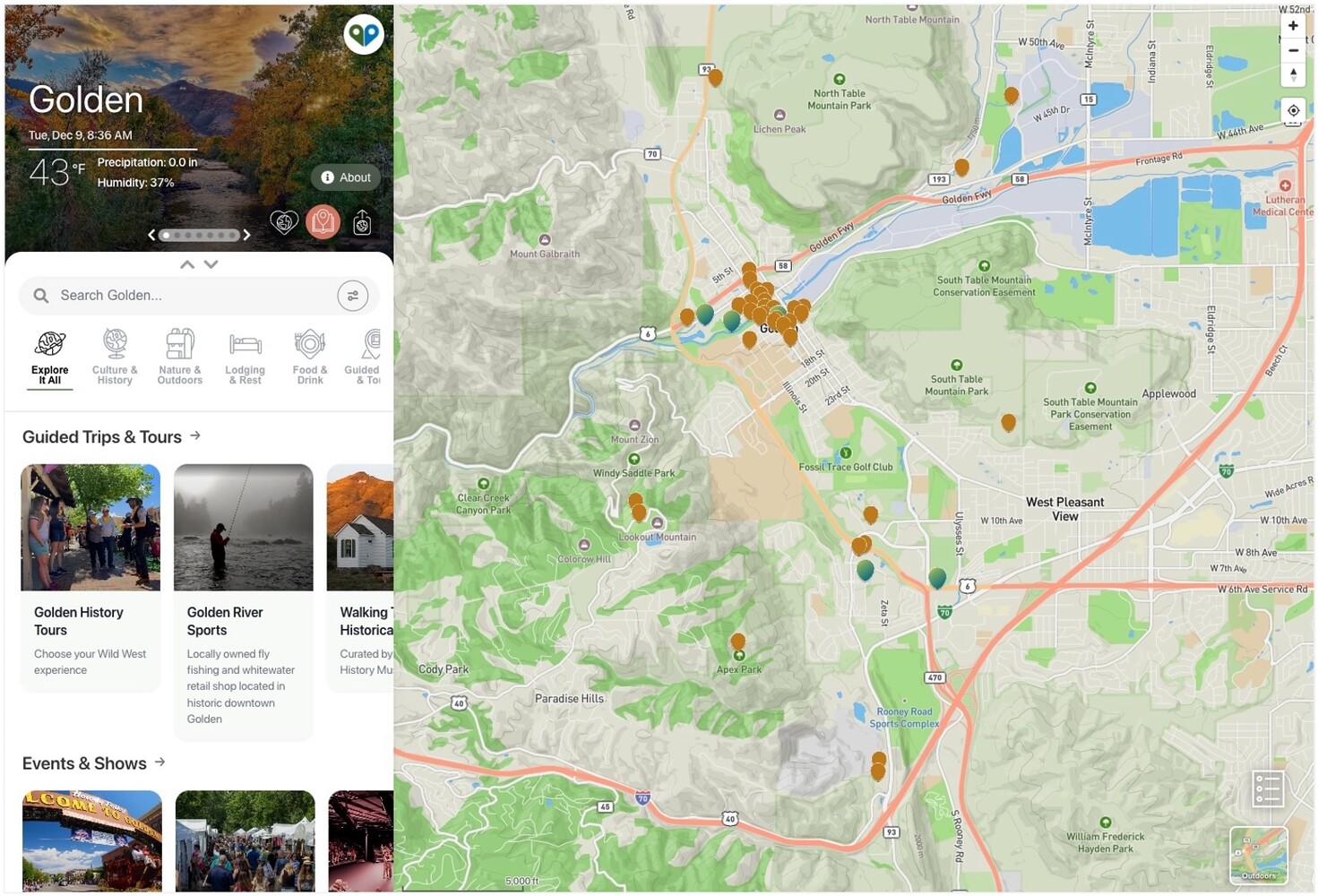
The scenic mesas and foothills that surround town and Clear Creek that runs through its heart are lined with hiking trails, bike paths, and climbing routes, and dotted with historic and geological sites that make it delightful to live, work, and visit here.
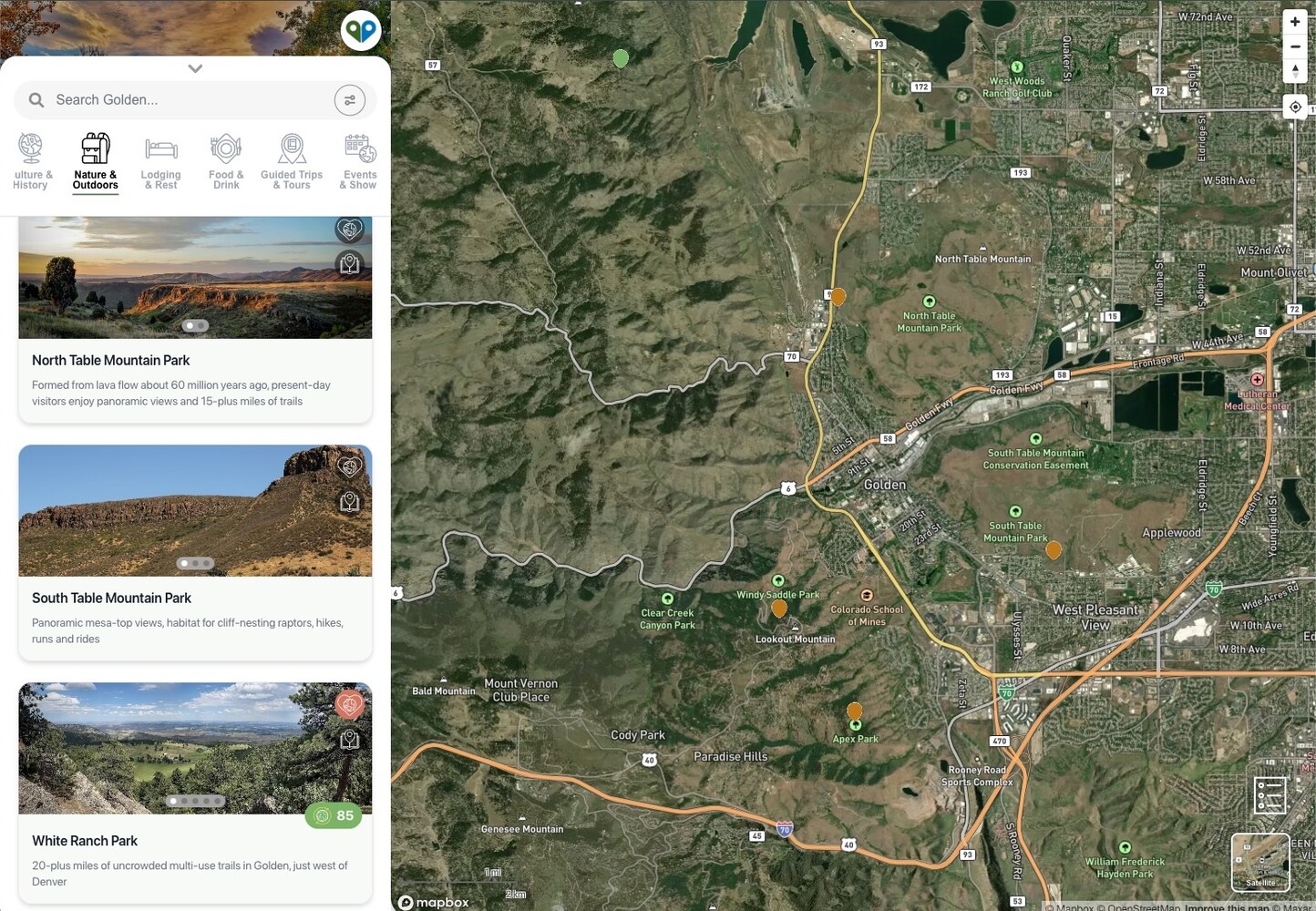
We’re blessed with an interesting and unique assortment of museums and cultural events, and a healthy collection of authentic, locally-owned lodging, dining, entertainment, and retail businesses. And the people who live here care about sustainability and maintaining and enhancing our quality of life. I think Golden is a perfect place to start testing and proving the GoGood concept and platform.
In January, we’ll start engaging the stakeholders and introducing GoGood Golden as an inspiring and innovative project of Sustainable Golden, a fledgling nonprofit working to enhance the sustainability of our town. I’m excited and nervous to launch the app, and well aware that what we’ve designed and built will have to change and adapt to real world challenges and technical and market realities.
But I’m confident in our platform and that the need and opportunity for GoGood and the destination stewardship approach are strong and growing. And by tapping into our shared love and care for places, and the movement for change in the way tourism and its assets are managed and marketed, we can transform the industry into a powerful force for good locally, and globally.
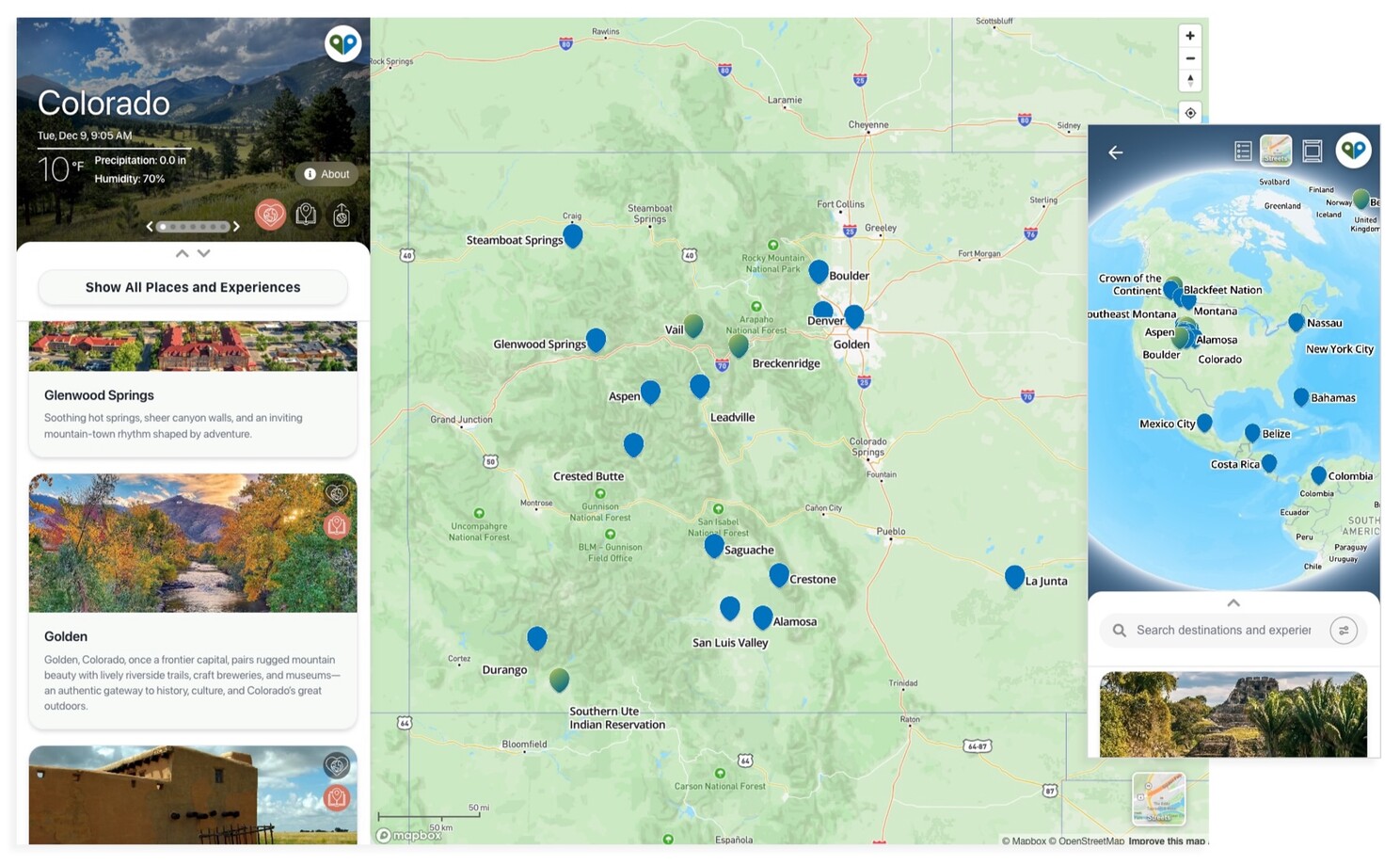
We are actively seeking partners, donors, and impact investors to help us scale the GoGood platform and test it in a variety of destinations around the world. Please reach out to me if you want to help with a major charitable contribution or program-related investment, or donate directly on our giving page.
And be sure to follow us, explore the beta app, and sign up for updates and sustainable travel tips at GoGoodTravel.org.